
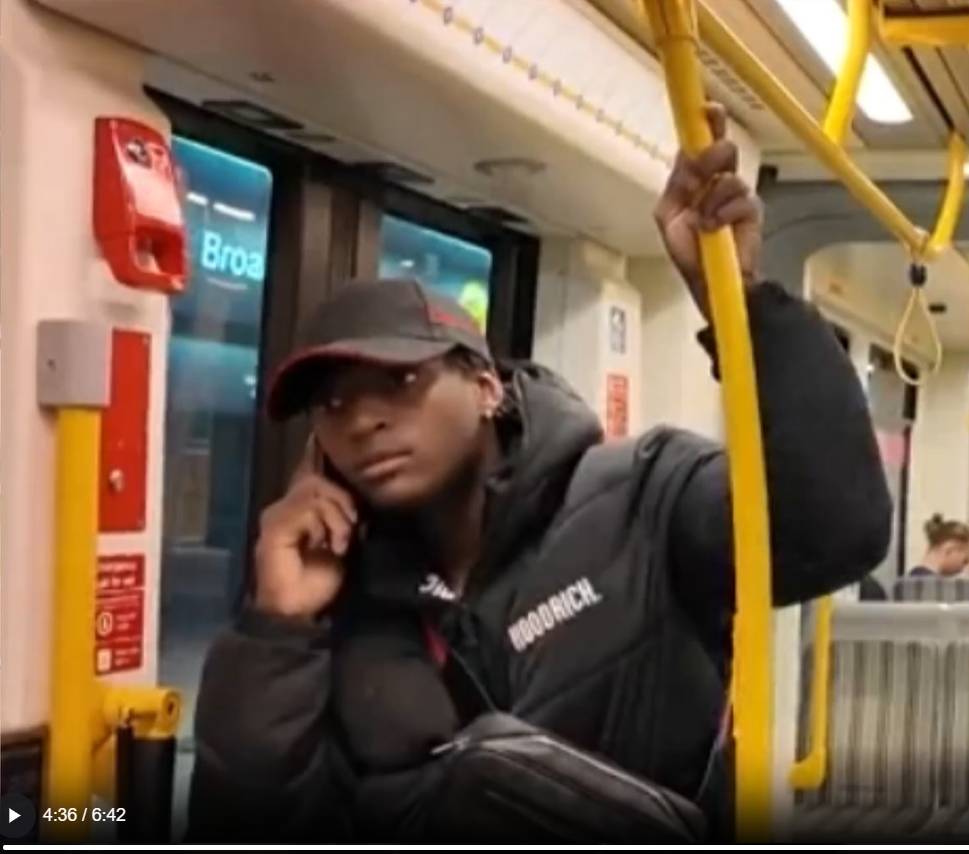

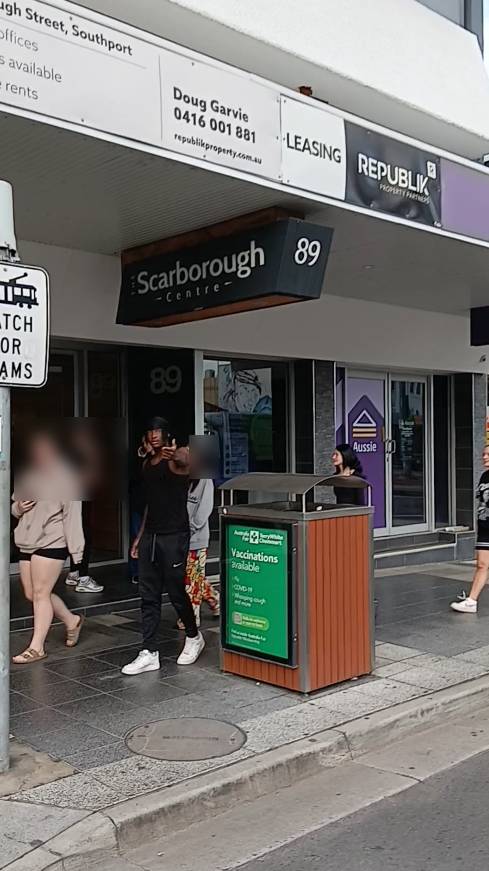



HOW I BECAME
HOMELESS
on the Gold Coast, and what happened when I fought back.
This is not a fictional case study. This happened to me. The documents are real. The charges were real. The outcome was real.

SANDY TULISI.
AKA SANDY PARK.
Sandy Tulisi — also known as Sandy Park — operated BeHome rooming accommodation in Surfers Paradise under the company Appel Street Pty Ltd. She also operated SOLAC HOUSE. The properties ran at high density, reportedly housing up to 100 tenants.
After signing a Form R18 rooming accommodation agreement, she issued six false rent-overdue notices (all rent was paid on time), held the bond for 68 days past the legal limit of 10, and invoiced a $20 fee for a cup. She obtained a police banning notice to enforce a civil tenancy dispute. All charges she initiated were subsequently dropped in full. Not a single one was upheld.
THE GOLD COAST DREAM
AND THE REALITY
"The Gold Coast looks like a dream. That's the whole point of it. What nobody tells you is that behind that strip — literally around the corner — there are people sleeping rough, rooming houses packed with 100 tenants, and landlords who've figured out the rules don't really apply to them if they're clever about it."
In August 2023 I was looking for a room in Surfers Paradise. Rent: $290 a week. A rooming accommodation agreement — Form R18 — was signed and I moved in on 18 August 2023. The landlord was Sandy Tulisi, operating under the name BeHome.
The signed rooming agreement — now uploaded — confirms the start date of 18/8/23 and contains a clause stating that after two months the tenancy becomes periodic. Two months from 18 August is 18 October 2023.
That is the same window — September and October 2023 — in which Sandy Tulisi issued six false rent-overdue notices and ultimately pursued eviction. By the time the Police Banning Notice was applied, the tenancy had already transitioned to a periodic agreement, carrying different protections under the Residential Tenancies and Rooming Accommodation Act 2008 (Qld). A periodic tenant cannot be evicted on the same grounds as a fixed-term tenant. She was attempting to apply fixed-term eviction mechanics to a tenancy that had already become periodic.
NOTICE TO LEAVE.
ISSUED UNDER "SERIOUS BREACH" — WITH NO BREACH ON RECORD.
This Notice to Leave — built on fabricated overdue notices, citing an undocumented breach, issued by an entity name designed to obscure accountability — was presented to police to justify issuing Police Banning Notice No. 385003 in what was a civil tenancy dispute. Not a criminal matter. The resulting charge was logically impossible: the accused was charged with contravening a notice before the notice had expired. All charges were subsequently dropped in full.
SANDY TULISI.
OR SANDY PARK. DEPENDS WHO'S ASKING.
"Google the address. You get BeHome. Serve a subpoena, the eviction notice says Appel Street Pty Ltd. Marc Barrow writes SOLAC HOUSE in his QP-9 charge sheet. Every official document uses a different name. Same property. Same landlord. Maximum legal ambiguity."
Bond number 714284215 was confirmed by the RTA on October 25, 2023 — 68 days after move-in. Legal requirement: 10 days. At a property with capacity for up to 100 tenants, if this delay was systematic, hundreds of bonds may have been held without proper protection.
THE NOTICE TO LEAVE IS ISSUED BY "APPEL STREET PTY LTD".
THE RTA'S OWN EMAIL CALLS IT "BEHOME".
The Notice to Leave — the formal legal document used to evict me — lists the issuing entity as Appel Street Pty Ltd. Not BeHome. Not SOLAC HOUSE. Not Sandy Tulisi or Sandy Park. A fourth entity name, appearing on the most consequential document in the entire dispute, making it as difficult as possible to trace what is happening to whom.
The RTA's own email — reproduced in the police correspondence — refers to the entity as BeHome. So the regulator uses one name, the eviction notice uses another, and the arresting officer wrote a third in his charge sheet. Each official document in this chain references a different legal identity. Any attempt to link the conduct to a single responsible party requires navigating between Sandy Tulisi, Sandy Park, BeHome, Appel Street Pty Ltd, and SOLAC HOUSE — all of which point back to the same property, the same operation, and the same person.
/ Sandy Park
Pty Ltd
(Barrow)
FINES FOR LEAVING BOWLS.
SIX FALSE RENT NOTICES.
"The fine wasn't for not washing a bowl. It was for leaving one. The photo they emailed was literally named 'Kosta Bowl left'. A bowl that was left somewhere. Tax invoiced. Twice."
Between September and October 2023 I received six emails falsely claiming rent was overdue. Bank records confirm every payment was made on time. An SMS from Sandy's personal mobile (0411 752 285) then threatened eviction based on a fabricated 13-day arrear.
The fine was not for failing to wash a bowl. It was not for damaging anything. The photo used to justify the invoice was emailed with the filename "Kosta Bowl left" — meaning the entire basis for the fine was that a bowl had been placed somewhere and not immediately moved. A tax invoice was issued for this. Then a second invoice was issued. Both are published below.
Neither fine appeared in the formal bond deduction statement subsequently submitted to the RTA — the document that legally sets out what money is being withheld from a tenant's bond. If these fines were legitimate deductions, they would have been in that statement. They were not. That omission is the landlord acknowledging, in their own paperwork, that these charges were indefensible.
POLICE AT THE DOOR.
NOWHERE TO SLEEP.
"They called the police. And they showed them an eviction notice. An invalid one. Built on the fake breach notices. A Police Banning Notice — No. 385003 — was applied. The kind designed for alcohol and drug incidents at licensed venues."
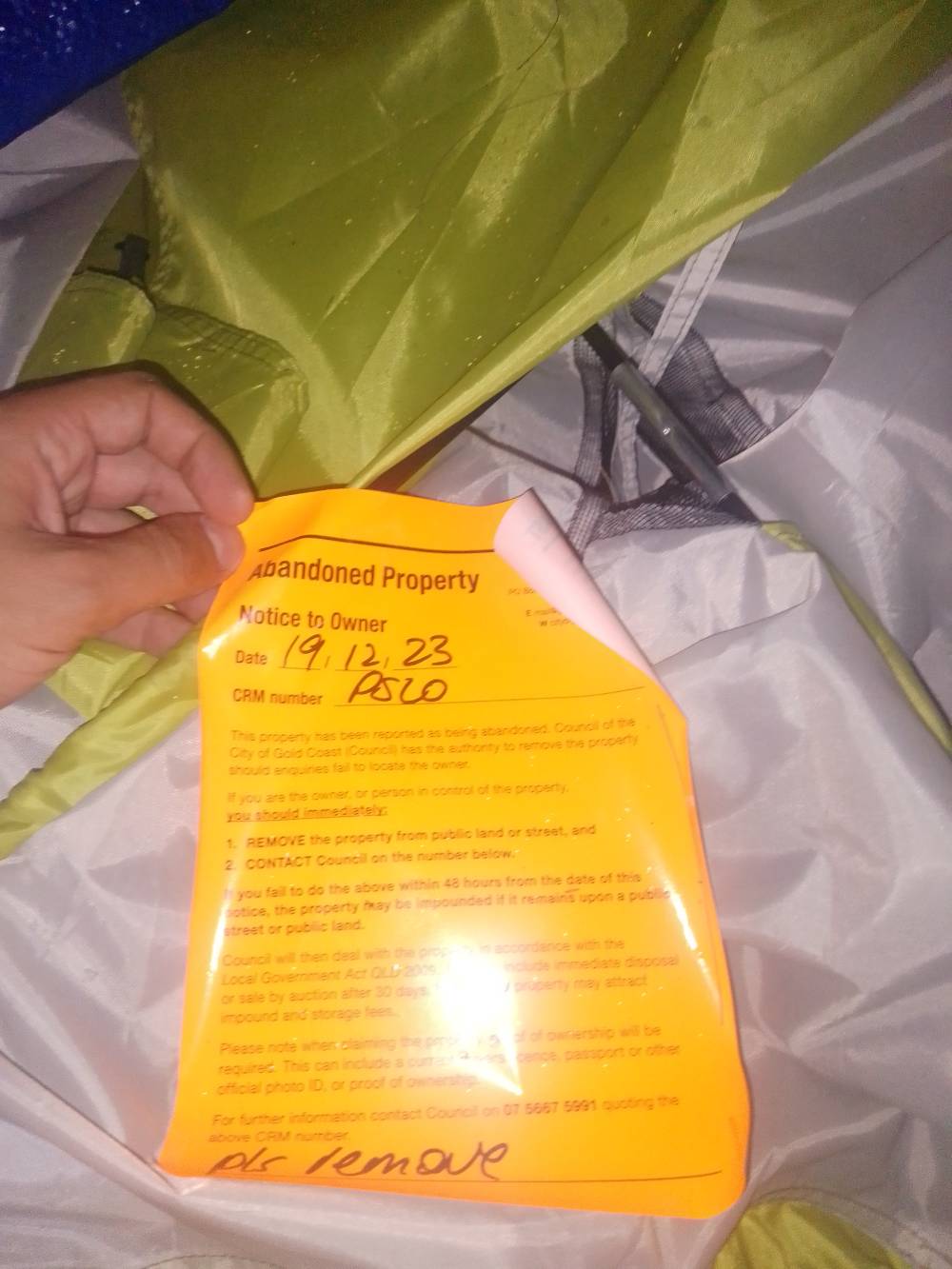
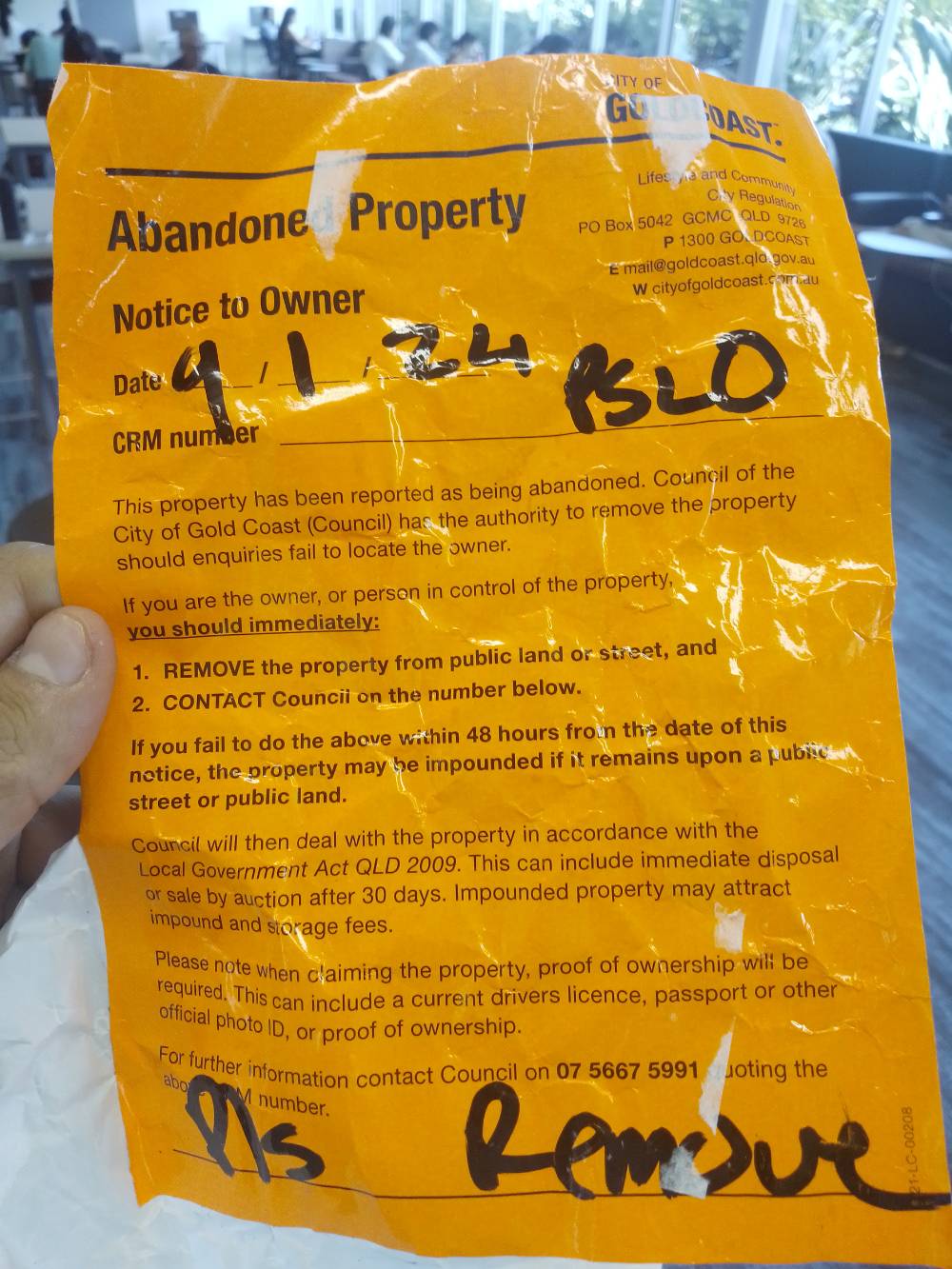
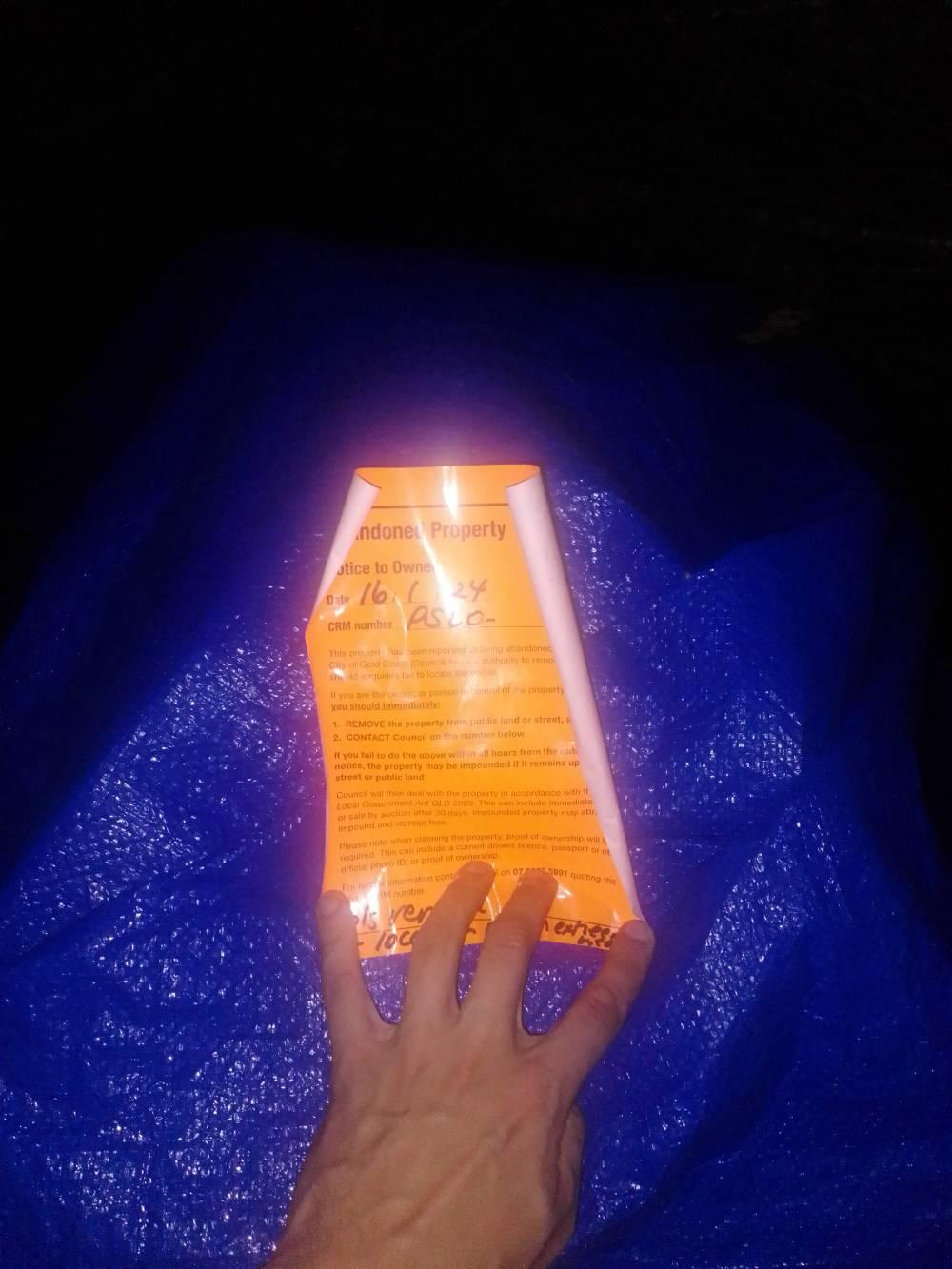
I was arrested. Charged with Contravening a Banning Notice. My belongings were removed. I was evicted without due process. I was homeless that night.
The charge of contravening the Notice to Leave was issued on 23 October. The Notice to Leave itself did not expire until 5pm on 24 October. You cannot contravene a notice that has not yet required you to leave. The charge was applied before any breach was legally possible.
The Notice to Leave was issued under the category of Serious Breach. There is no email documenting what the serious breach was. There are no complaints from any housemates. The Public Nuisance incident — itself disputed — occurred after the Notice to Leave was already issued, meaning it could not have been the basis for it. The "serious breach" cited to justify removing a person from their home has no paper trail because no breach occurred.
HE WROTE "SOLAC HOUSE".
THE SIGN ON THE BUILDING SAYS "BEHOME".
In his official statement, Marc Barrow refers to the property he evicted me from as "SOLAC HOUSE" — not BeHome. BeHome is the trading name. It is on the building. It is how the property is marketed and found. SOLAC HOUSE is the entity registered with the RTA — a name that the average person would not associate with the premises, and which the police officer documenting the eviction would have seen labelled as something entirely different when he arrived.
The choice to write "SOLAC HOUSE" in an official police statement is not a clerical error. It is the use of the obscured legal entity rather than the visible trading name — precisely the split identity that Sandy Tulisi maintained to create legal ambiguity. By using "SOLAC HOUSE" in his statement, Barrow insulates himself from any direct association with BeHome: he can claim he simply documented what he was told, without needing to acknowledge the BeHome signage on the building in front of him.
THE LAWYER.
CHARGES DROPPED.
"He's a lawyer. Not a community legal centre lawyer. He took my case pro bono. The Contravene Banning Notice charge was subsequently dropped in full."
Contravene Banning Notice charge — fully resolved. No conviction. No penalty.
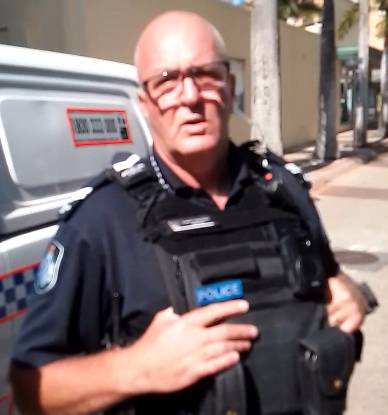
THE OFFICER WHO FILED THE CHARGE RETALIATED WHEN A CCC REPORT WAS MADE AGAINST HIM.
The officer who placed the Contravene Banning Notice charge — Marc Barrow — was the subject of a Crime and Corruption Commission report filed by Kosta Kondratenko. In response, Barrow contacted Adam Watson directly to inform him that he would be opposing the liquor licence application on Adam's planned purchase of the Platinum and Empire nightclubs in Surfers Paradise — two venues owned by the same person. The message was clear: associating with Kosta Kondratenko carries a penalty.
Corey Cook, the prosecutor, was contacted about the phone call. Cook agreed it was overreach by Barrow — once again — and contacted Marc Barrow's supervisor to ask him to stop targeting Adam Watson. There was no anti-social behaviour on Adam's part that could justify the opposition. There was nothing to oppose on the merits. It was an officer using his position to punish an innocent third party because of who that person associated with.
This incident illustrates two systemic failures simultaneously: members of Queensland Police are permitted to pick on the homeless and on those connected to critics of the force — and face no repercussions. And the Crime and Corruption Commission, to whom the original report was made, provides no meaningful deterrent to that behaviour.
CCC report filed on Marc Barrow by Kosta Kondratenko
Barrow contacts Adam Watson — threatens to oppose Platinum & Empire nightclub liquor licence
No anti-social behaviour by Adam — no legitimate basis for opposition
Prosecutor Corey Cook contacted about the call
Cook agrees: overreach by Barrow
Cook contacts Barrow's supervisor — asks him to stop targeting Adam Watson
Marc Barrow made a comment to Adam Watson that if RJ stabs Kosta to death, he will turn a blind eye. Adam Watson relayed this to Kosta. A sworn officer of Queensland Police stated to a third party that he would ignore the murder of a named individual by a named associate. This is not a figure of speech. It is a threat communicated via an intermediary, and it has been documented accordingly.
A COMPLAINT HAS BEEN MADE AGAINST MARC BARROW
BY A FEMALE MEMBER OF THE QUEENSLAND POLICE SERVICE.
Marc Barrow is the subject of a formal complaint made against him by a female member of the Queensland Police Service. This is not a complaint from a member of the public — it originates from within the QPS itself, from a colleague. The nature of that complaint is known to this publication and is consistent with the broader pattern of conduct documented across this section.
"WE ONLY DEAL WITH THE MOST SERIOUS AND SYSTEMIC CASES."
REFERRED BACK TO QUEENSLAND POLICE SERVICE.
The Crime and Corruption Commission was notified of Marc Barrow's conduct. Their response: they only deal with the most serious and systemic cases of corruption, and the matter was referred back to the Queensland Police Service — the same body the report was made about.
The CCC had access to all of the following at the time of the referral: a charge issued the day before the notice expired; a property deliberately misclassified as a hostel in official documents; items removed from the premises without a warrant of possession; retaliation against a third party (Adam Watson) over the CCC report itself; a sworn officer communicating through an intermediary that he would ignore the murder of a named person by a named associate. They referred it back to QPS.
The purpose of the Crime and Corruption Commission is to act when Queensland Police cannot or will not hold themselves accountable. When the oversight body receives a complaint, reviews the material, and sends it back to the institution being complained about — the institution has not been scrutinised. It has been protected. This is not a failure of process. It is the process working exactly as those who benefit from it intend.
THEY REVIEWED THE BWC FOOTAGE.
THEY WON'T RELEASE IT.
When the CCC referred the complaint, it was forwarded to the QPS Ethical Standards Command. The ESC reviewed the Body Worn Camera footage from the eviction and, on 18 June 2024, Inspector C A Sanderson issued a formal outcome letter under reference COM-24-00427. The finding: force was not excessive, officers' actions were lawful and reasonable, no misconduct was found.
Following the outcome letter, a request was made to the ESC for the BWC footage to be provided — particularly after the Public Nuisance charge was dropped by the Magistrate. The ESC declined to provide the footage. The request was redirected to the QPS Right to Information Unit. The footage has not been released.
The ESC outcome letter explicitly references the allegation that Marc Barrow entered the BeHome property without a Warrant of Possession. The ESC found this to be lawful. This publication disputes that finding. The position here is straightforward: Barrow viewed the Notice to Leave — a notice to a tenant, not a court order authorising physical removal. A Notice to Leave and a Warrant of Possession are not the same instrument. Only a Warrant of Possession authorises the removal of a tenant from licensed rooming accommodation under Queensland law. Barrow had one. He did not have the other.
What the BWC footage will show — if it is ever released — is the following: Marc Barrow entering the BeHome property without a Warrant of Possession; removing Kosta Kondratenko's belongings from the premises; and then coming to the paddy wagon to ask whether the laptop was his. That is what occurred during the Public Nuisance charge. These events are not in dispute. They happened. The BWC exists. The ESC has reviewed it. It has not been released.
If the QPS wish to dispute the account of what occurred at the BeHome property on the night of the eviction — release the Body Worn Camera footage. It will show what happened. This publication will publish it in full.
PERSONAL SECURITY.
IN UNIFORM. ON THE PUBLIC PAYROLL.
"I told his second-in-command that nobody in that building is paying bonds. He looked me in the eye and said: 'You don't know what you're talking about.' The RTA confirmed 68 days later that bond number 714284215 had just been lodged. He knew. He just chose not to."
During the confrontation with Marc Barrow and his second-in-command, the bond non-compliance at BeHome was raised directly. The officer's response — "You don't know what you're talking about" — was not a factual denial. It was a dismissal designed to end the conversation. The RTA subsequently confirmed the bond had been sitting outside the scheme for 68 days. The officer was not uninformed. He was unwilling.
What the video documents is not simply a heated exchange. It is a pattern of behaviour: officers attending a licensed rooming accommodation in a professional capacity, not to protect tenants or enforce the law, but to act as the operational extension of the landlord's authority. Tenants — most of whom have no knowledge of their rights under the Residential Tenancies and Rooming Accommodation Act — were being evicted on police direction without warrants of possession. That is not a police function. That is a private enforcement service, delivered in uniform, funded by the public.
"YOU DON'T KNOW WHAT YOU'RE TALKING ABOUT."
— MARC BARROW'S SECOND-IN-COMMAND
The comment was made in direct response to the claim that no tenants at BeHome were having their bonds lodged within the legal 10-day requirement. It is the classic gaslighting structure: the person with information is told by the authority figure that their information is wrong — not with evidence, but with confidence. The authority's certainty is meant to replace the facts.
The RTA documentation, published in this section, establishes that bond 714284215 was lodged 68 days after move-in. The legal maximum is 10. The officer had no factual basis for his dismissal. He had presence of mind to dismiss it anyway. This is the conversation captured on video.
THE ALLEGATION:
SANDY IS PAYING. TOM TATE IS RECEIVING. POLICE ARE DEPLOYED ACCORDINGLY.
Inside information received by this publication alleges that Sandy Tulisi / Sandy Park has been providing financial kickbacks to Gold Coast Mayor Tom Tate — and that, in return, officers within Marc Barrow's network have been directed to turn a blind eye to her operation and to act as her personal enforcement mechanism when tenants need to be moved on.
This would explain what is otherwise difficult to explain: why a licensed rooming accommodation with documented bond fraud, a multi-entity obfuscation structure, and a pattern of tenants removed without warrants of possession, continues to operate without council or police intervention — while the same officers attend the property to enforce the landlord's wishes directly.
Sunlight.Quest has not yet been able to formally evidence the financial relationship. The allegation is published here because it is directly relevant to the conduct documented in this section, and because the public interest in knowing the alleged mechanism of that conduct — if true — is significant. This publication will update this section when further material is available.
Multiple tenants at BeHome and associated properties operated by Sandy Tulisi / Sandy Park have been removed from the premises through police attendance — without a warrant of possession, without following the formal eviction process under the Residential Tenancies and Rooming Accommodation Act 2008, and without the tenant being informed of their legal right to remain pending a tribunal order.
A warrant of possession is the legal instrument required to physically remove a tenant. Without it, any removal is unlawful — regardless of whether a Notice to Leave has been issued. Many of the tenants at these properties are in vulnerable circumstances, are unfamiliar with the RTA framework, and have no access to legal advice. The presence of uniformed police officers creates the impression of legal authority where none exists for the removal itself.
A warrant of possession is required before a tenant can be physically removed — Queensland law, no exceptions
Police attendance at a civil tenancy eviction, without a warrant of possession, does not make the removal legal
Tenants who don't know this have no way to object — which is precisely why it keeps happening
If you have been removed from a BeHome property by police without a warrant of possession, you may have been unlawfully evicted — contact the RTA or a community legal centre
THE REGISTRAR'S MISTAKE.
INJUSTICE GOES FREE.
"I sent a detailed legal email to Southport Court Registry explaining why Form 21 was the correct subpoena form. Their response was to stamp Form 10 anyway. A judge later said they should never have done that. By then it was too late. The landlords walked free."
To call witnesses — particularly Sandy Tulisi and Chris Park — I needed subpoenas issued by the court. The Justices Act 1886, Section 78 states that only a justice can issue a summons (Form 10) if a witness will provide material evidence. I am not a justice. The Criminal Practice Rules 1999, Rule 29 explicitly permits parties like myself to issue subpoenas using Form 21. I sent this legal analysis to the Southport Court Registry in writing.
The Registry's response was to suggest I use Form 10 anyway. Adam complied, got it stamped, and had it served on Sandy Tulisi. At trial, the Judge explicitly stated that the Registrar should never have stamped that form — it was procedurally improper.
Result: No bench warrant was issued when Sandy didn't appear. Chris Park never took the stand. The two key witnesses against the landlords were absent from the courtroom. I won the case — the charges were dropped — but the landlords faced no accountability because the court's own official failed to follow proper procedure.
"DO YOU THINK YOU CAN MISLEAD THE COURT
BECAUSE YOU'RE A POLICE OFFICER?"
The full transcript of the Contravene Banning Notice proceedings is published below. What it documents is not just a procedural failure — it is a courtroom in which the system actively worked against the person it was supposed to protect.
On cross-examination, I asked Marc Barrow directly: "Do you think you can mislead the Court because you're a police officer?"
The Judge intervened — prompted by Adam Watson's guidance — to ask whether Barrow could answer the question as put. He could not answer it plainly. A police officer on oath, asked whether he thought his uniform entitled him to mislead a court, could not give a straight answer.
The Judge did not have the subpoena file in front of her. The document proving formal service on Sandy Tulisi — the very basis for why she should have been in that courtroom — was not before the court. The Judge stated she had no proof the people named in the subpoena had actually been served.
The service had been filmed in full. The video had been provided to the Court. The Judge made her comments without it. This is not a hypothetical risk of a paper-based court system — it is an actual outcome that occurred in this case.
Page 27 of the police correspondence establishes something that cannot be explained away as an error: the prosecution had a copy of the RTA bond confirmation. That document shows the property registered as a rooming accommodation — not a hostel. They had it. They knew what Sandy Tulisi was operating. They knew about the split identity between BeHome and SOLAC HOUSE.
And yet they stood in court and called it a hostel. And the Judge went along with it. This was not a mistake made from ignorance. This was a choice — made with the documentation in hand — to misrepresent the nature of the property in a proceeding against the person who had been evicted from it.
"The Judge didn't even have the video of Adam Watson serving the subpoena and made comments that she had no evidence it was served. I filmed it. I gave it to the Court. The Court didn't have it in front of them. This is how the system works against you — not through malice, but through a paper-based process that loses documents, loses videos, loses accountability — and when it does, the wrongdoer walks free and you carry the consequences."
I WON THE CASE.
THEN I SENT THE TRANSCRIPT BACK TO THE REGISTRAR AND ASKED AGAIN.
After the charges were dropped and the Judge had explicitly stated on the record that the Registrar should never have stamped Form 10, I emailed the Southport Court Registry. I attached the transcript. I explained what the Judge had said. And I asked, as a matter of feedback — and so I would know for any future proceedings — what the correct form was.
The Registrar did not answer the question. The response did not identify the correct form. It did not address the Judge's comments. It did not acknowledge the procedural failure that caused Sandy Tulisi to walk free. Instead, the Registrar's response directed me to seek Legal Aid.
"The Judge said the Registrar should never have stamped Form 10 in my situation. I've attached the transcript. Can you confirm what the correct form is for a party to issue a subpoena — so I know for future proceedings?"
Deflection. Seek Legal Aid. No form identified. No acknowledgement of the Judge's ruling. No answer to the question asked.
This is not an isolated failure of one Registrar on one day. This is a system that does not give self-represented parties accurate procedural information — not before, not during, and not after the case. When the Judge says on the record that the wrong form was stamped, and the Registry's response to that transcript is to tell you to find a lawyer, the message is unambiguous: the system expects you to fail without one. And it will not correct itself even when corrected from the bench.
THE SAME QUESTION. ASKED TO AN AI. ANSWERED IN SECONDS.
The question the Southport Court Registry refused to answer — what form should a self-represented party use to issue a subpoena in Queensland — was posed to Claude. The answer was immediate, accurate, and referenced the correct legislation: Criminal Practice Rules 1999, Rule 29. Form 21. The same answer that was sent to the Registry in the original email before the trial. The answer the Registry ignored.
A public institution whose function is to assist parties navigate court procedure sent a self-represented person to get a lawyer rather than answer a basic procedural question. A publicly accessible AI answered it correctly, with citations, for free. The implication is not that AI is better than the courts. It is that the courts are choosing not to help — and that choice has consequences for justice.
View the Claude conversation → Form 21 vs Form 10 explainedAN UNIDENTIFIED MAN.
RECORDING THE PERSON SERVING THE SUBPOENA.
Adam Watson attended the BeHome property to serve the Form 10 subpoena on Sandy Tulisi and Chris Park. The entire service attempt was recorded — not to document harassment, but to provide a court record of proper service in the event it was later disputed.
On arrival, a shirtless man with earrings — not Sandy Tulisi, not Chris Park — appeared and began recording Adam Watson on his phone. The property already had CCTV cameras covering the premises. A person choosing to additionally film someone who is there to serve legal documents, in a property already under camera surveillance, serves one purpose: intimidation. When asked directly on camera to provide his name, the man refused. He remains unidentified. His deliberate refusal to identify himself is consistent with the wider pattern of obfuscation surrounding this operation — and raises the question of what the police knew about who was present at this property and why.
Sandy Tulisi eventually answered the door. She stated that Chris Park was sick. She accepted service of the documents. The service was complete and recorded on video.
Unidentified shirtless male recording Adam Watson on phone
CCTV already present — additional filming unnecessary
Man refuses to identify himself when asked directly on camera
Sandy Tulisi answers door, accepts service
Sandy states Chris Park is sick
Service was required for court — this video is the proof it occurred
Counter-filming by an unidentified associate of the subject — deliberate refusal to ID adds to pattern of obfuscation
Despite being served, Sandy Tulisi did not appear in court
No bench warrant — because the form was wrong, as documented above
When Court Officials Make Mistakes, Who Pays the Price?
A court registrar — a government official — gave incorrect legal advice and stamped an improper form. This wasn't disputed. The Judge confirmed it was wrong. But the consequence fell entirely on the victims of the original wrong (me, the person evicted; potentially Sandy and Chris who might have testified). The landlord — the party who created this entire chain of events through illegal conduct — walked away without facing the witnesses who could hold them accountable.
This is systemic injustice. Not through malice, but through procedural indifference. The court system protected its own mistake by allowing the substantive outcome to be determined by a technicality that protected the wrongdoer.
I am now publishing this evidence formally to establish a record: When court officials make procedural errors that prevent victims from presenting evidence, those errors should not result in the wrongdoer going free. Accountability requires that official mistakes don't become escape routes for the actual criminals.
$400 MILLION. DIGITAL COURTS. THE REFORM THAT WOULD HAVE STOPPED THIS.
Attorney General Deb Frecklington has conveyed to Adam Watson a $400 million commitment to digitising the Queensland court system. The reform would move court processes — including the filing, stamping, and serving of documents — onto a private portal. The practical consequence: the type of registrar error that occurred in this case, where incorrect verbal advice and an improperly stamped form allowed a wrongdoer to escape accountability, would be substantially harder to make. Procedure would be enforced by the system, not by the individual official standing at the counter.
The cost of the current system is not measured in dollars alone. It is measured in weeks spent preparing documents, navigating counter staff who give contradictory advice, travelling to courthouses, waiting for stamps, arranging service — only for a procedural error by a court official to undo the entire effort at the moment it matters most. Sandy Tulisi's landlord walked free not because the evidence was insufficient, but because the system stamped the wrong form and a judge could not look past it. That is not justice. That is administration defeating accountability.
Forms validated by system before stamping — wrong form cannot be accepted
Private portal creates audit trail — verbal advice that contradicts procedure is eliminated
Filing, serving, and tracking in one place — no more manual counter stamps that can be challenged
Self-represented litigants guided through correct procedure — reducing reliance on counter staff who may err
Weeks of preparation undone by one counter error
No compensating mechanism when the court's own mistake produces the unjust outcome
Wrongdoers who can afford lawyers benefit from self-represented litigants being misdirected by staff
Procedural complexity disproportionately burdens those who cannot pay for representation
WHY AI MATTERS FOR ACCESS TO JUSTICE
The Sandy Tulisi matter illustrates something that is true across thousands of cases every year in Australia: the person in the right loses not because the evidence is wrong but because they do not know which form to use, which registry to file at, or which procedural rule their opponent's lawyer is about to exploit. The gap between knowing the law and being able to use it is where most injustice lives — and it is a gap that disproportionately punishes the poor, the homeless, and the self-represented.
Artificial intelligence — applied to legal procedure — can close that gap in a way that no previous technology has been able to. An AI that knows the correct subpoena form, knows the relevant rule, checks against the court's procedural requirements before the document is filed, and flags errors before they become irreversible is not a luxury. It is what equal access to justice looks like in practice.
Frecklington's $400 million commitment to digitising the court system is a structural step in the right direction. The next step is making those digital systems intelligent — capable of guiding ordinary people through procedure in the same way that an experienced lawyer does, without the $500-an-hour price tag that currently determines whose procedural errors get caught and whose do not.
SHE OPENED A NEW ONE.
BEHOME. SURFERS PARADISE. AGAIN.
While the evidence on this page documents what happened at her first operation — the bond held 68 days over the legal limit, the false rent notices, the improper eviction — Sandy Tulisi has opened a new BeHome location in Surfers Paradise.
The same name. The same suburb. Funded, at least in part, by whatever financial advantage was extracted from tenants through the conduct documented here. No conviction recorded. No barrier to operating again.
The system that failed to hold her accountable the first time has given her the space to do it again. BeHome is open. The evidence is here.
THE QFES CAN TURN OFF THE POWER.
SANDY'S PROPERTY IS NOT FIRE-SAFE.
The Queensland Fire and Emergency Services has a power that no other regulator in this chain has used: if a property is found to be non-compliant with fire safety standards, the QFES can direct that power be cut to the building. A rooming house operating with up to 100 tenants and no compliant fire safety infrastructure is not a technicality — it is a life-safety risk.
Sandy Tulisi's operation has a documented pattern of issuing one-day eviction notices to tenants caught vaping inside the property. A single-day notice for vaping — in a building where up to 100 people sleep — suggests the property's approach to fire safety is about rule enforcement against tenants, not structural compliance. The rules exist, but only when they are useful as an eviction lever. The question of whether the building itself meets Queensland's fire safety standards for rooming accommodation at that density is a separate and more serious matter.
A formal referral was made to the Queensland Fire and Emergency Services documenting the property's fire safety concerns. As of the date of this publication, no response has been received. The referral stands. The property continues to operate.
PHOTOGRAPHED. ANNOTATED. LEAKED.
THE COUNCIL DROPPED IT ANYWAY.
"My photograph was taken from the CCTV inside the Southport Aquatic Centre. It was printed, pinned to a staff noticeboard, and annotated. Then it was photographed by a staff member and sent to members of the public. The Council opened an investigation. Then closed it. I used the upstairs shower — the one outside the gym — because it had better water pressure. That is the full extent of my misconduct."
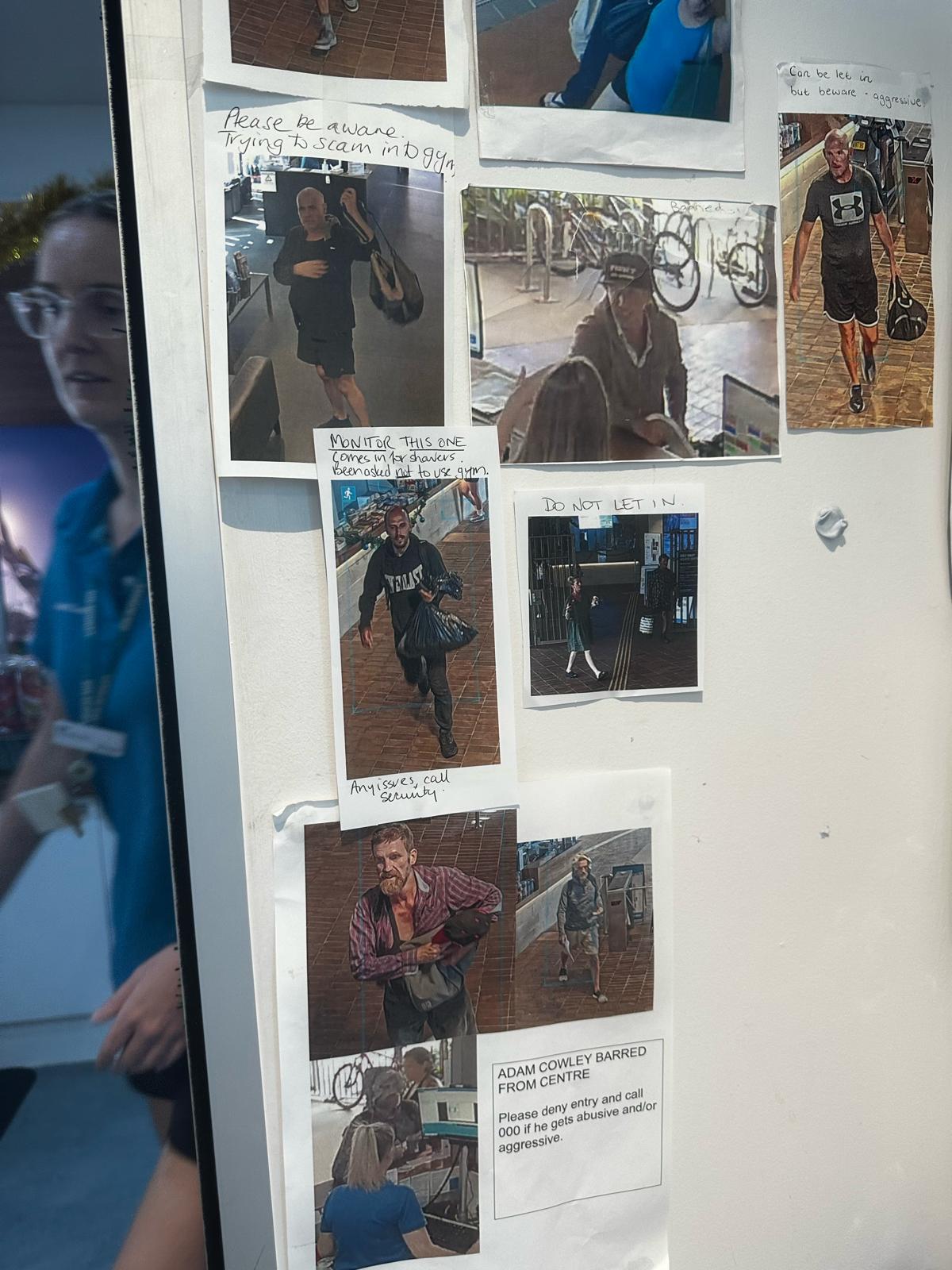
The leaked surveillance board from the Southport Aquatic Centre — a real photograph, a real annotations, a real distribution — constitutes a privacy breach under the Information Privacy Act 2009. My photograph was extracted from internal CCTV and placed on a staff noticeboard with handwritten annotations including terms designed to deny me entry and flag me to staff for surveillance. That board was then photographed and circulated. A formal privacy complaint was filed. The Gold Coast Council acknowledged it. Their own investigation ran for less than the legislated 45-business-day window before being discontinued — citing failure to receive further information from the complainant.
The information needed to investigate — the photograph, the annotations, the identity of the staff member who circulated it — was entirely within the Council's own systems. The Council did not need me to provide it. They had it. The discontinuance was not a procedural outcome. It was a choice.

HIS TATTOO SAYS "PEACE."
HE WENT TO THE BULLETIN TO PLAY THE VICTIM. THEN TRIED TO RORT THE 820 VISA.
Felipe Mattos was featured in the Gold Coast Bulletin complaining that he was being denied entry to nightclubs because of his neck tattoo. He told the reporter he was not a bikie. He said he comes in peace. His neck tattoo says peace.
Goes to the press: unfairly targeted, victim of prejudice
Tattoo says peace — he comes in peace
Swim teacher, DJ, innocent professional
Photographs and distributes a surveillance board containing images of members of the public — a privacy breach
Tells Adam Watson directly he is using the 820 relationship visa as a pathway to citizenship — not a genuine relationship
Attempts to purchase prescription Ozempic from Adam Watson to resell illegally
He went to the mainstream press to claim he was being judged unfairly because of a tattoo that says peace. The same person was simultaneously using a relationship that he has described as not genuine to rort the 820 Partner Visa pathway to Australian citizenship — a visa program designed to protect genuine relationships, not provide cover for those who admit privately that the arrangement is instrumental. Clubs reading his tattoo and turning him away may have been the least of anyone's concerns.
THE PERSON WHO CIRCULATED IT
IS A FREELANCE PHOTOGRAPHER WHO HAD BEEN APPROACHED FOR WORK.
Felipe Mattos is the person responsible for photographing and distributing the surveillance board. He is a freelance photographer who contracts his work out independently — he had been approached by this publication for photography work. He is not a permanent employee of the Aquatic Centre. The Gold Coast Council, in correspondence, stated that the name of the staff member involved had not been provided to this publication. That email is in the evidence vault below.
Regardless of whether the Council chose to provide the name: my photograph was taken from their CCTV, placed on a board by their staff, and distributed by someone working in their building. The Council's obligation to investigate did not depend on me identifying the person. They had the CCTV logs. They had the staff records. They had the building. They dropped the investigation anyway. When the Crisafulli administration took over and applied pressure, Felipe Mattos and his entire team were fired. The Council had been covering for them.

820 Visa / Relationship fraud: Felipe Mattos is on an 820 Partner Visa and is in a relationship with an Australian woman aged approximately 40. He has told Adam Watson directly that he is using the relationship to obtain citizenship — not because it is genuine. He is currently attending therapy about his relationship issues, with the apparent intention of being able to subpoena the therapist after obtaining citizenship to establish the relationship was not working — supporting any future visa challenge.
Ozempic supply: Felipe Mattos attempted to purchase Adam Watson's Ozempic medication so that he could sell it on the street for weight loss. Adam Watson has the text messages. Ozempic (semaglutide) is a prescription medication. Its onward sale without a licence constitutes illegal supply under Queensland law.
Unwanted sexual advance — "I masturbated over you": Felipe Mattos made an unsolicited sexual advance toward Adam Watson, telling him directly: "I masturbated over you." The statement was made without invitation. It is inconsistent with a person presenting himself publicly as the victim of discrimination and playing the peace symbol on his neck. It is entirely consistent with someone whose conduct toward others does not match the persona he projects.
"I didn't like you at first because you could see right through me": Felipe Mattos told Adam Watson that he initially disliked him — not because of anything Adam had said or done, but because Adam Watson could see through him. The admission is notable: it is a person acknowledging that his dislike of someone was rooted in that person's ability to perceive what he was actually doing. It is an inadvertent confession that there was something to see through.
These matters are published on the basis of direct communications held by Adam Watson. This publication will update this section as further material becomes available.
A SECURITY GUARD TOLD ME I HAD THREATENED THE AQUATIC CENTRE.
I DENY THIS. POLICE NEVER CONTACTED ME.
Following the privacy breach becoming known, Aquatic Centre employees made comments to Adam Watson that by showing this publication the leaked surveillance board, he had created a situation that could potentially put those employees in danger. This is the inversion of accountability: the person who circulated a photograph of a member of the public without consent was not identified as the risk. The person who made the breach known was.
I was subsequently approached by security outside the Aquatic Centre at night. A security staff member made a direct comment: that I had threatened the Aquatic Centre. I deny this accusation in full. No specific threat was ever made. No person was ever put at risk by anything I said or did.
Critically: Queensland Police Service never contacted me regarding any alleged threat. I was not interviewed. I was not served with any notice or direction. I was not the subject of any formal complaint communicated to me by police. This means one of two things: either the allegation was never reported to police — in which case it is not credible enough to be put on record — or it was placed into internal police files without my knowledge. The latter possibility raises a more serious concern.
That Kosta Kondratenko threatened the Aquatic Centre following the privacy breach becoming public.
QPS never contacted Kosta
No interview conducted
No formal complaint served
Likely placed in internal files only
THE NOTES IN THE SYSTEM.
KERRY STOKES HAS BEEN MADE AWARE.
Kerry Stokes has been made aware of the Aquatic Centre privacy breach and the subsequent conduct — including the security confrontation and the unverified allegation about internal police files. Stokes has offered to put up a defense fund, under which Discovery Network would recover any notes placed into police or council systems and cross-reference them with Queensland Police Service, who can be subpoenaed to give sworn testimony as to why they were never contacted about the supposed threat made against the Aquatic Centre.
If there are entries in internal police files characterising Kosta Kondratenko as a threat based on an allegation made by Aquatic Centre security staff — entries made without a formal complaint, without interview, and without any contact with the person allegedly named — those entries can be recovered, examined, and tested against the sworn testimony of the officers responsible for creating them.
The annotations on the surveillance board suggest I was flagged as a concern at the Aquatic Centre. The full extent of my conduct there was this: I went upstairs to use the shower outside the gym because it had better water pressure than the downstairs change rooms. A security guard asked me to leave. The exchange was pleasant. I complied immediately. That is the entirety of the incident. No aggression. No disturbance. No resistance. I left when asked.
My photograph was taken from CCTV and placed on a surveillance board because someone decided, without any formal complaint or incident, that I should be monitored. That is the origin of this entire matter. The breach was not triggered by my conduct. It was triggered by someone's decision to photograph and circulate images of a member of the public without their consent or any lawful basis.
The Gold Coast Council acknowledged my complaint in December 2024 and confirmed it was being investigated by the Chief Risk and Audit Office under the 45-business-day window set by the Information Privacy Act 2009. They subsequently discontinued the investigation — citing failure to receive further information from the complainant. An email was sent to the Council asking for the name of the staff member responsible. That email was not answered.
The Council did not need my response to continue its own investigation. The photograph was from their CCTV. The noticeboard was in their building. The staff member was their employee. The decision to discontinue despite having access to all material evidence — and despite failing to respond to a direct inquiry — reflects a Council that is not interested in holding its own employees accountable for privacy violations against members of the public. The fact that the Council's website was then used to block access to this publication adds context to that disinterest.
Sunlight.Quest formally demands that Mayor Tom Tate retract his characterisation of Kosta Kondratenko as a "public nuisance." All charges against Mr Kondratenko have been dropped. A written retraction is requested. Deadline: 30 days from publication.
THE CCC RECEIVED A CORRUPTION REPORT ON TOM TATE.
AND DIDN'T EVEN REPLY.
A corruption report concerning Tom Tate was emailed to the Crime and Corruption Commission. The report did not include photographs. The CCC did not email back to request that photographs be added. They did not follow up in any form.
The minimum expectation when a corruption report is lodged with a government watchdog is that the watchdog reads it — and if the submission is incomplete, asks for what is missing. The CCC did neither. The silence is not merely a procedural shortcoming. It is evidence of an institution that is not taking the reports handed to it seriously.
A body that exists to investigate corruption but does not respond to corruption reports is not a watchdog. It is a filing cabinet.








.jpg)
.jpg)